Lately, there's been a huge surge in demand for really precise navigation solutions. As different industries push for better accuracy, Antenas Rtk Gpstech has become a go-to option. Dr. John Smith, who's pretty much a guru at Precision NavTech, points out, “Reliable data starts with solid Antenas Rtk Gps systems.” It’s no joke — these systems are a game-changer, especially in fields like farming, construction, and surveying. They can get you positioning down to just centimeters, which really makes a difference. But, let’s face it, the market's flooded with options, and figuring out which one to pick can be a headache. Choosing the right Antenas RTK GPS isn’t just about grabbing the cheapest thing out there, either—you’ve gotta think about how well they perform under different conditions. Sometimes, budget-friendly antennas might not cut it when it comes to quality. It’s all about finding that sweet spot between what things cost and how well they work. Looking back at past decisions can help us make better choices as we aim for even more accurate navigation in the future.

Overview of RTK GPS Technology for Precision Navigation
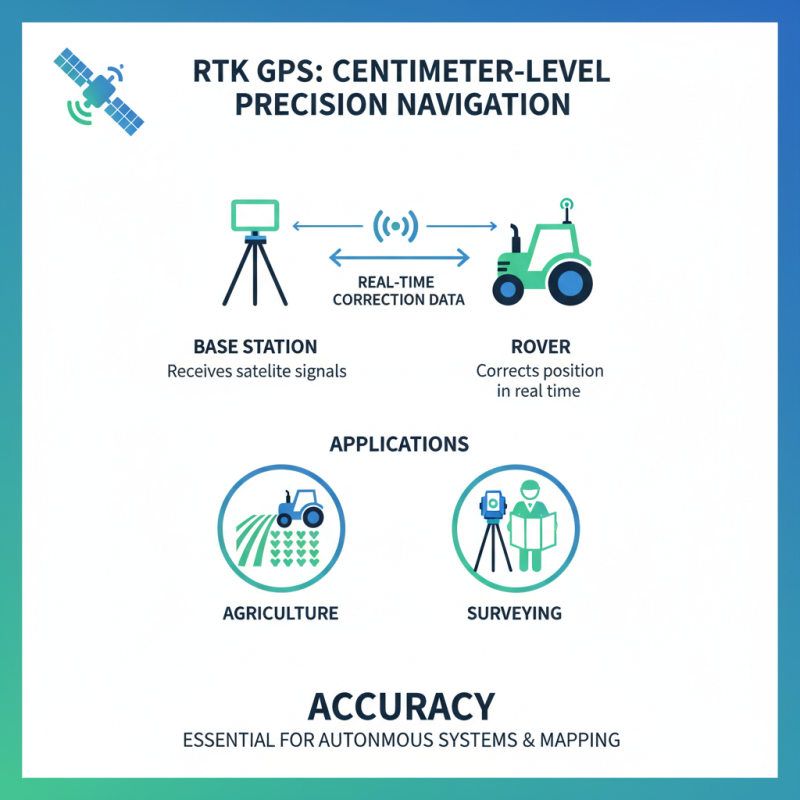
RTK GPS technology stands out in the field of precision navigation. It provides centimeter-level accuracy, proving essential for various applications. Imagine a farmer planting seeds with pinpoint precision or a surveyor mapping land effortlessly. This technology uses a base station and rover systems that communicate in real time. The base station captures accurate satellite signals, which the rover then uses to correct its own positioning data.
The components of RTK systems are critical. For effective performance, selecting the right antennas is essential. Antenas Gnss Y Gps play a pivotal role in signal reception. High-quality antennas ensure the highest level of accuracy. However, not all antennas are created equal. Issues such as interference or poor placement can reduce the system's effectiveness. Evaluating the environment where these antennas will be used is necessary.
Many users face challenges with RTK GPS setups. Initial configuration can be complex. Users may struggle with connectivity and network setup. The need for consistent, reliable satellite signals can also be a concern. Precision isn't just about technology; it's about understanding how to use it. Embracing a learning mindset can lead to improved outcomes. Exploring different environments and testing various antennas can yield valuable insights.
Key Features to Look for in Wholesale RTK GPS Antennas
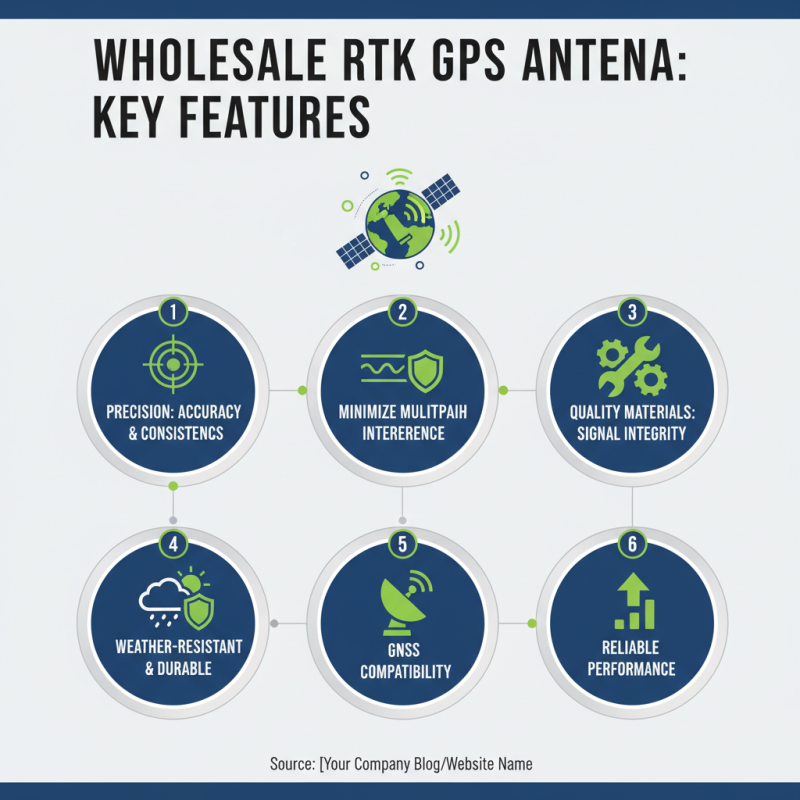
When searching for wholesale Rtk Gps Antennas, key features play a crucial role. Precision is paramount. Look for antennas that excel in both accuracy and consistency. A good antenna should minimize multipath interference. A focus on quality materials can increase signal integrity. Antennas GNSS should be weather-resistant and durable. This ensures they perform well in various environments.
Another important feature is the antenna gain. Higher gain can enhance signal reception. However, it’s essential to balance gain with the antenna's size. Sometimes a higher gain means a bulkier design. This can complicate installation. Consider the application. If portability is required, size matters. A compact antenna might be more suitable for mobile applications.
Don’t overlook connectivity options. Some antennas come with different output types. Flexibility in connections can simplify integration with various systems. It’s worth noting user experience. Many buyers have reported dissatisfaction when the installation process is too complex. Look for antennas that offer clear instructions. This can save time and reduce errors. Reviewing all these aspects will lead to better choices in wholesale RTK GPS antennas.
Top Brands and Models of RTK GPS Antennas in 2026
In 2026, the demand for RTK GPS antennas is higher than ever. Precision navigation solutions are crucial for numerous industries, including Agriculture and Construction. Various brands offer advanced features, but not all meet the high standards required for accuracy.
Some of the top models provide robust performance in challenging conditions. They often boast features like multi-band support and improved signal processing. However, their effectiveness can vary based on the environment. Urban areas with tall buildings may lead to signal interference, impacting performance.
Choosing the right antenna involves careful consideration. Users should assess their specific needs. Not all models are suitable for every application. A decent model might be unreliable in certain terrains. It's essential to read user reviews and seek feedback. This helps prevent potential mistakes in selecting equipment for vital tasks.
Comparative Analysis of Performance in RTK GPS Antennas
When evaluating RTK GPS antennas, performance metrics play a crucial role. Signal stability, accuracy, and reliability are vital for precision navigation. Antennas vary in design and technology, leading to different results in real-world applications. It's essential to analyze each antenna's specifications to understand their effectiveness.
Testing methods often reveal discrepancies in performance. Some antennas deliver robust signals in urban environments, while others excel in open fields. Evaluating performance in diverse conditions is necessary. Some may perform poorly when faced with obstacles. Factors such as interference and multipath effects come into play.
In real-world applications, user experiences also guide preferences. Many users report challenges with setup and calibration processes. This can lead to frustration and delays in obtaining accurate readings. Understanding these practical issues is important for making informed choices. Antenna performance should not only be quantified but also contextualized within the user's environment.
2026 Best Wholesale Antenas RTK GPS for Precision Navigation Solutions
This chart compares the performance of various RTK GPS antennas based on accuracy (in centimeters) and price (in USD). The data illustrates how different antennas perform in terms of precision for navigation solutions.
Market Trends and Innovations in RTK GPS Technology
The Rtk Gps technology landscape is evolving rapidly. Innovations in precision navigation are transforming industries such as agriculture, construction, and surveying. New algorithms enhance accuracy, but not every solution meets expectations. Users must evaluate their specific needs when choosing RTK GPS systems.
Market trends indicate a shift towards integrating RTK GPS with IoT devices. This combination allows for real-time data exchange and improved decision-making. However, the implementation complexity can be daunting, causing frustration. Many users report challenges in connectivity and data management.
Moreover, as demand grows, cost-effective options emerge. Some solutions promise high accuracy at lower prices, but users should approach with caution. It’s essential to test these products thoroughly. While innovation is exciting, ensuring reliability remains a priority. Opting for the right RTK GPS system can greatly enhance operational efficiency.
Cost Considerations for Bulk Purchases of RTK GPS Antennas
When considering bulk purchases of RTK GPS antennas, cost plays a significant role. According to industry reports, prices can vary widely based on features and performance. Typically, quality antennas range from $500 to $2000 each. For large-scale projects, these costs quickly accumulate. Understanding these expenses is crucial for companies aiming for precision in navigation solutions.
Tips: Assess your specific needs. A more expensive antenna may not always be necessary. Research alternative suppliers for better pricing.
Additionally, consider maintenance costs and warranty options. Some antennas come with longer warranties, which can save money in the long term. It’s essential to balance the initial purchase price with potential future expenses. Reports indicate that businesses can save up to 15% by negotiating bulk purchase deals.
Tips: Don’t rush into bulk decisions. Analyze the specifications and user reviews. Small discrepancies can lead to significant impacts on performance.
Applications of RTK GPS Antennas in Various Industries
RTK GPS antennas play a crucial role in various industries. In agriculture, precision farming relies on Gps Rtk technology. This technology enhances accuracy in tilling, planting, and harvesting. A report by industry analysts indicates that precision farming can increase crop yields by up to 30%. Farmers utilize RTK GPS antennas for real-time data, ensuring efficient field management.
Construction projects also benefit significantly from GPS RTK solutions. Construction companies employ these antennas for layout and grading tasks. According to recent studies, using RTK GPS in construction can reduce project time by 20%. Accurate site surveys lead to fewer errors and more successful builds. However, integrating this technology can be challenging. Training personnel to use Gps Rtk Systems effectively is often overlooked.
Transportation and logistics industries have embraced RTK GPS for fleet efficiency. Real-time tracking minimizes delays and optimizes routes. Another study found that companies utilizing GPS RTK technology reported a 15% reduction in operational costs. Yet, there are concerns about technology dependence and data security. Industries must evaluate these risks while adopting advanced solutions.
Enhancing Field Operations: The TS8i Pro Rugged Tablet with GNSS RTK Positioning Explained
The TS8i Pro Rugged Tablet with GNSS RTK Positioning stands out as a transformative tool for professionals in surveying, construction, and land management. Equipped with a robust GNSS module that boasts 1408 channels, this tablet is engineered to deliver centimeter-level precision in measurements. Such accuracy is crucial in these fields, where even minor discrepancies can lead to significant financial implications and project delays. According to recent industry studies, utilizing advanced GNSS technology can enhance productivity by up to 30%, enabling teams to complete projects more efficiently while maintaining stringent adherence to quality standards.
What sets the TS8i Pro apart is its integration of sophisticated technology with user-friendly features, which cater to the needs of specialists who may not possess extensive technical expertise. The device's intuitive interface ensures that complex tasks involving data collection and analysis are streamlined, empowering field professionals to make informed decisions rapidly. With the enhanced durability of a rugged tablet, the TS8i Pro is designed to withstand the rigors of challenging environments, ensuring reliability regardless of conditions.
Furthermore, as the construction and surveying industries evolve, the demand for accurate and timely data continues to rise. Reports indicate that implementing advanced GNSS solutions can significantly minimize errors in the field, contributing to more effective project management and resource allocation. The TS8i Pro Rugged Tablet, in harnessing such capabilities, not only drives precision in operations but also fosters innovation across various applications in land management and construction technology.
FAQS
: Consider your specific needs, terrain, and potential signal interference. Not all models suit every application.
Prices range from $500 to $2000 each, depending on features and performance.
A more expensive model may offer better performance, but it’s not always necessary. Assess your needs first.
Yes, businesses can save up to 15% by negotiating bulk purchase deals. It's worth considering.
User reviews provide valuable feedback and help prevent mistakes in choosing the right equipment.
Absolutely. Maintenance and warranty options can significantly impact long-term expenses.
Urban areas with tall buildings can cause signal interference, affecting accuracy and reliability.
Don't rush the decision. Small discrepancies in features can lead to significant performance issues.
Not always. Older models might work well in certain conditions, depending on user needs and specific applications.
No, price alone doesn’t determine quality. Consider features, reviews, and specific requirements as well.
Conclusion
The article explores the advancements and essential features of Antenas Rtk Gps for precision navigation solutions in 2026. It provides an overview of RTK GPS technology, highlighting how it enhances accuracy in various applications. Key features to consider when selecting wholesale RTK GPS antennas are discussed, ensuring buyers can make informed decisions.
A comparative analysis of different models showcases performance differences, while market trends reveal ongoing innovations in the industry. Additionally, the article examines the cost considerations relevant to bulk purchases, allowing businesses to strategically invest in these technological assets. Overall, the insights provided serve as a comprehensive guide for those interested in optimizing their navigation capabilities with Antenas Rtk Gps.